Since February 2009 , this blog and Huib's 3 other Euroblogs are together at:

AT HOME IN EUROPE [EU] (at EURACTIV)
- In Europa Zu Hause [DE]
- L'Europe Chez Soi [FR]
- At Home in Europe [EN]
- In Europa Thuis [NL]

Showing posts with label Near East. Show all posts

Tuesday, August 31, 2010

Wertheim: Modern-day Racism: A Mixture That Calls for Some Clarification | Informed Comment

In front of the tsunami of discrimination and hate-mongering against foreigners and their families, that invades Europe here and now, too few are the voices of intellectuals and scientists, who master the courage to say what they know is the truth: Modern-day hate-mongering is following the same road as recent waves of hate, discrimination, pogroms, ethnic cleansing and mass-extermination rode, just before they burst into collective aggression, war and death. 

In Germany, recently, a team of sociologists, historians and media-experts scrupulously researched the stunning parallels between the genesis of European antisemitism after the emancipation of Jews thanks to the French Revolution during the nineteenth and early twentieth centuries, and modern anti-Islamism. I published an authorized summary of it in HUIBSLOG: Antisemitismus und Islamophobie – Neue Feindbilder, alte Muster [DE] in June 2010. In French (and mostly translated into English), similar studies by Olivier Roy: La sainte ignorance. Le temps de la religion sans culture. (2008).


University Of Michigan Professor (History) Juan Cole publishes a Blog (Informed Comment) since 2002. He is a fine expert of the Muslim world, its history and its diversity. Two of his most recent books are here:

Engaging the Muslim World (2009) sets a possible course for the new Obama administration, doing away with the neocon-inspired Bush "war against evil states".

Napoleon's Egypt: Invading the Middle East (2007) develops a historic parallel between Napoleon's disastrous invasion of Egypt in 1797-99 and the 2003 Bush war against Iraq.

Cole generates a daily stream of posts that deal with the real developments "on the ground" in the Middle East and Asia and intervenes into US debates, learned and less learned, that develop around those issues.

Now and then, Cole publishes a "guest editorial" by another expert. Amsterdam-based retired journalist and writer Anne-Ruth Wertheim develops her father²)'s analysis of the different types of racism here, inspired by the rise of Mr. Wilders' political career, based on discrimination and hate-mongering. Wilders' ideas are racist, in her view. She explains, what mixture of racisme we have to to do with, here.
²) (Prof. Wertheim, Amsterdam University, one of my teachers there during the Sixties)

Ruth Wertheim is announced as follows at Informed Comment (IC):
Anne-Ruth Wertheim is a journalist and the author of various books including De gans eet het brood van de eenden op, mijn kindertijd in een Jappenkamp op Java (The Goose Snatches the Bread from the Ducks, My Childhood in a Japanese Prison Camp on Java, 1994). An Indonesian translation of the book was published in March 2008.She works with the concepts of exploitation/colonial racism (contempt or condescension) and cultural/competition racism (envy and distrust).
Wertheim: Modern-day Racism: A Mixture That Calls for Some Clarification | Informed Comment:
Posted on August 30, 2010

Anne-Ruth Wertheim writes a guest editorial for Informed Comment:

Propagators of modern-day racism, which is often called Islamophobia in an effort to take off the edge, claim that all they are doing is warning people about what they see as the danger of Islam, and that it has nothing to do with racism. But it is a misconception to think that racism only pertains to the physical features people are born with. Throughout history, cultural characteristics that people develop in the course of their lives have also been grounds for maligning and excluding certain groups. The competition racism that mercantile minorities all across the globe have been, and still are, confronted with, as well as the anti-Semitism in pre-WWII Europe, were imbued with cultural prejudices, and never failed to include the item of religion.

Nonetheless it is understandable that people feel confused. Modern-day racism is a mixture of two types of racism, exploitation or colonial racism and cultural or competition racism. Thus, while focusing primarily on a cultural aspect of the group, such as Islam, their religion, there still exists a focus on the group’s physical features. I will try to explain this in my article.

I was born in Indonesia when it was still a Dutch colony. I lived in a beautiful house with my parents and my little brother and sister. Like any child, I looked at the world as something that was just there. There were always Indonesian servants around who were quick to pick up anything I dropped. They would take my dirty clothes and give them back clean and neatly ironed. At breakfast every morning, my mother would sit at the table and talk to Kokki about what she would cook that day, Kokki squatting on the ground as they spoke. And when I was allowed to go along shopping, I would see Chinese proprietors bossing around Indonesians who swept the floors.

My view of the world consisted of three layers, with us white Dutchmen on top, the Indonesians at the bottom, and the Chinese in between.

From one day to the next my view of the world turned upside down when I was seven. World War II was raging in the Pacific and the Japanese occupied the Dutch East Indies. They set up a cruel regime that was to last for three and a half years and sent us and everyone else who was white to internment camps. We hardly had anything to eat, not much of anything else either, and were kept in line with a show of physical force. Our camp was guarded by Indonesian soldiers who were beaten just as hard by the Japanese as we were, though they were fed a lot better.

Now the Japanese were on top and we were at the bottom with the Indonesians in between.

Halfway through the war, the Japanese, who were allies of Nazi Germany, started to follow its example and separate Jews from non-Jews. My father, who was at an internment camp for men, was Jewish, but my mother, who was with me and my brother and sister at the women’s camp, was not. So we three children were half-Jewish and the Japanese threatened to separate us by force from our mother. To keep that from happening, my mother decided to register as Jewish herself and all four of us went to the Jewish camp together.*

After the war our family returned to the Netherlands and I discovered that my father’s Jewish family had been almost entirely killed and my Jewish grandparents had committed suicide the day the Dutch capitulated to the German army.

Shortly before and during the war, both of my parents were gradually convinced of the legitimacy of the Indonesian people’s struggle for independence. As outsiders among other Dutch people, who still felt and thought in a very colonial way, our family had to endure a lot of aggression, which of course had great impact on me as a high school student.

So by that time I had experienced quite a bit of racism and violence and all kinds of images were tangled up in my mind. It was not until much later that I started to untangle the chaos of images. One of the people I learned from was my father, a sociologist of Southeast Asia, W. F. Wertheim. He drew a distinction between two types of racism:

1. Exploitation or colonial racism towards colonized peoples and blacks during slavery and Apartheid. They were considered stupid and lazy and unable to govern themselves, but good enough to do the heavy labour for the ruling white minority.

2. Competition or cultural racism towards mercantile minorities all across the globe who compete with the established majorities. The Chinese in Indonesia and Jews in pre-WWII Europe were considered sly and cunning and accused of wanting to rule the world.

Continuing in my father’s footsteps, I discovered a shift here in Europe and thus also in the Netherlands. The first guest workers from Turkey and Morocco were confronted with the familiar old-style colonial racism and they were looked down upon. As is witnessed by the numerous references in modern-day racism to the alleged inabilities of immigrants, this tendency to look down on these people is still very much in evidence. But now that their children and grandchildren are better able to compete, the racism is starting to exhibit more elements of competition racism and to focus more on their cultural features. It is turning against Muslims and in essence all non-Western immigrants.

So, at the moment, a shift can be observed from the colonial, exploitation type of racism that focuses on physical features to the cultural type of racism that focuses on cultural features such as religion. Being somewhere in the middle of this shift we now have to do with a mixture which combines elements from both types of racism.

This modern-day mixture is nicely illustrated by the language the extreme right-wing Dutch politician Geert Wilders uses, slyly intertwining looking down on people with inspiring fear of them.**


In this chart I show exactly where the differences lie between the two types of racism. To start with, they apply to totally different groups. This is directly linked to the kind of work they do and their economic position. In this connection, there is also a difference in the prejudices that are put into circulation. In colonial racism, the prejudices have to do with contempt and disdain and focus mainly on physical features, and in cultural racism they evoke fear and mainly focus on cultural features. The intentions behind the prejudices are completely in line with what they are supposed to justify, in one case exploitation, in the other exclusion.

When I write and talk about these two types of racism, something that always strikes me is how much more familiar the exploitation type of racism is to people than the competition type. Racism that pertains to groups that are forced to do the heavy work and are considered to be stupid and lazy, is widely known, and the human damage caused by colonial and post-colonial procedures is recognized manifold. But the other type of racism that pertains groups that are competitive and for that reason accused of being dangerous and striving for total domination, is amazingly unknown. Nevertheless this last type has also caused and still causes much damage in the world – ranging from pogroms on Chinese mercantile minorities everywhere in Asia, to the expulsion of the Indian- and Pakistani mercantile minority from Uganda, to what happened to the Jews in Europe.

It is also interesting to see what makes people believe in prejudices that they nonetheless prefer to keep to themselves. No one is about to admit how much they like feeling superior to another group. And in our competition-ridden society, envy and jealousy are frowned upon; anyone who has less than someone else has only himself to blame. This capitalistic ideology was aptly stated recently by Dutch right-wing politician Mark Rutte when he sardonically referred to a higher tax for the rich as jealousy tax. So it is no wonder people would rather not admit their envy towards the competitiveness of immigrants and prefer to be carried away by cheerleaders for the fear of Islam.

Lastly, the violence – be it extremely diverse – that accompanies each type of racism. In the case of exploitation racism, only a few rebellious individuals are publicly punished to keep everyone else in their place. The group as a whole, after all, has to remain healthy enough to do the hard work. But the intention of cultural racism is to exterminate an entire group or expel them from the country. History has shown that this kind of mass violence is set in motion once the epithets that really scare people have been uttered long and systematically enough about a specific group. It is not without reason that people who commit these acts of violence so often say that they had no choice, that it was self-defence. And in every case, the outbreak of violence was preceded by a sharper outlining of the group, accompanied by allusions to expulsion, and a stronger emphasis on recognizing members of the group.

With their seemingly purely economic question about the costs of all the non-Western immigrants and their children and their children’s children, the propagators of modern-day racism in the Netherlands recently put a group in the spotlight that everyone can recognize by the colour of their skin. This is going to mean trouble. But there is still time. Time for more and more people to understand the mechanisms that are in motion and opt for a future of peaceful coexistence.

* I tell this story in The Goose Snatches the Bread from the Ducks. My Childhood in a Japanese Prison Camp on the Isle of Java, which can be ordered on DVD or downloaded via this site.

** See This Link to my earlier essay at IC (Wilders' Lethal Words)
----------------------
Anne-Ruth Wertheim beloofde me vandaag een Nederlandse vertaling, die onmiddellijk zal worden opgenomen.
(Update 1/9/10:  NL versie is gepubliceerd in Huibslog: Anne-Ruth Wertheim: Hedendaags racisme, een mengvorm die verheldering verlangt [NL] en in De Lage Landen, plus Krapuul: Nuttig essay van Anne-Ruth Wertheim: Wilders’ koloniaal- en concurrentie-racisme)
Eerdere versies van bovenstaand artikel van Ruth Wertheim verschenen op Republiek Allochtonië en Weblog Anja Meulenbelt.

Friday, March 19, 2010

Clinton and Ashton: US-EU Girl Power Made Netanyahu Climb Down


The three "40+ breakthroughs"
  • Hillary Clinton spent 40+ minutes on the telephone with Israeli PM Binjamin Netanyahu, making it perfectly clear that, this time, the Obama Administration would not accept "No" for an answer to its demands that Israel puts an end to its provocations.
  • In a first show of which impact a united European stand can have on Washington's capacity to effectively change its policies in the Obama way, Catherine Ashton braved Israeli objections and visited Hamas-governed Gaza Strip on a 40+ hours' mission.
  • Combined US and European action made the overconfident rightwing Netanyahu-Lieberman Government give in within another 40+ hours.

Israeli Government gives in and works at damage-control
This morning's Guardian brings a first evaluation: Israel's Binyamin Netanyahu in climbdown over US demands for peace.
The key issue of the clash between the US and Israel was the provocatively announced construction of 1.600 Jewish flats in the contested East Jerusalem area. The Guardian:
He [Netanyahu] did not announce, as the US had demanded, a freeze on the construction of Jewish homes in Ramat Shlomo, in East Jerusalem, the key point at issue.
But diplomats in Washington, Moscow and Jerusalem said Netanyahu had given a private promise that there will be a temporary freeze on any new construction. The work, while not cancelled, is to be postponed for several years.
Substantial negotiations between Israel and the Palestinians are still far away. But this could be a turning point. The Guardian points out, that:
Obama and Clinton stand to gain from the Israeli retreat, which will heighten their reputation among the Palestinians and in the Arab world. Obama and Clinton were left looking weak after a similar stand-off with Israel last September when peace talks failed to get under way.
The EU as a whole is in an awkward position concerning the Middle East. They have big security interests at stake, much more important than those of the US.
During the G.W.Bush administrations, a divided Europe had to remain powerless at the side-lines, when its vital interests were put in danger by the 2003 Iraq invasion, by the Bush-supported killing of the remains of the Oslo arrangements, by the ill-inspired Israeli invasion of Lebanon in 2006 and, last but not least, the Cheney-handcrafted 2008 Georgian disaster (where Israeli "advisers" to the Georgian army played a key role).
A story of exacerbated European divisions
Most of the time, Europe was divided. In 2002/2003, divisions between the Blair-led UK and the other bigger EU powers France and Germany, were even exacerbated, as Blair harangued most fresh Eastern European EU-members and, to a still undisclosed measure, Balkenende's Holland, at the side of the US Neocon Iraq scheme. A lasting European rift was avoided, thanks to the stupidity of US post invasion policies in Iraq, that brought soon striking evidence of the underlying fraud and made it clear, how much the Iraq adventure was and is contrary to every possible European interest.
As part of the big powers' Oslo Quartet, the EU did not weigh much upon the steady dismantling of the two-state solution. As a "useful idiot", the EU furnished and still furnishes, the bulk of the international financial support to the Palestinian Authority, only to see its investments repeatedly destroyed by Israeli bombs (harbour, airport).
And Tony Blair again: As a Quartet appointed facilitator of negotiations in the region, what has he done?

During the 2006 Lebanon invasion, the EU found more of a common stand than before. It helped and helps, thanks to the wisdom of many Lebanese leaders, to maintain a shaky cease-fire at the Northern border of Israel. But proposals by the German Foreign Secretary Fischer, to extend the EU peace operation to areas of conflict between Israel and Palestine, fell on deaf ears.
Another result of the US failures, their pro-Likud stubbornness and their open contempt of the NATO allies, has been, now and then, a revival of outdated particular claims in the Middle East from former European colonizers and mandate-holders. France saw an opportunity, for instance, after the murder of Hariri in Lebanon, to reassert some of its former influence there, as the US hopelessly failed in understanding the particular dynamics of that multicultural society. That did not help to forge a common European stand, either.

Georgia: A turning point in retrospect
But Sarkozy's unique and rapid intervention (as he happened to be president of the EU in 2008) in the Georgian conflict, showed for the first time, that the EU can deal independently with its own interests in the wider region, if it acts quick and undivided.
While Cheney himself was desperately stoking conflict in defeated Tbilissi, France made for the EU an honorable compromise with Moscow that the Bush administration had to bow to.
This was exceptionally possible because of the halfheartedness of the US intrigue in Georgia.
For, in a general way, it is a hard fact, that the EU only can progress in its international security policy, if it is not going against the US and/or Russia's.
A united stand of the EU, even at this moment of the still fledgling Ashton mission, will also influence US and Russian positions, like it seems to me, that has happened now by way of the surprising Gaza initiative of the EU's Ashton.

Let us give the two-girls power a chance!

Friday, May 09, 2008

Lebanon: The Clash, so long announced and feared.

Juan Cole follows hour after hour developments in Lebanon. The armed clash, involving Hizbollah and the Lebanese Army, the one the US and so many others longed for, and the same one that so many others (including me) hoped could be avoided, happens these days.

... 2006: young Lebanese visit Beirut neighborhood where their apartment stood, after Israeli bombings ....


An informed observer is cited on Cole's Informed Comment Blog (9.5.08):

Monday, December 10, 2007

Juan Cole on another Invasion of the Middle East: Napoleon in Egypt (1798)

Readers of this Blog often see my Informed Comment-faves on Iraq and the Middle East in general. Their author, history professor Juan Cole, gets a biographical note below. I borrow the following text from a recent post in the FireDogLake Blog by Swopa.

You should go there and read the interesting discussion of the book between Cole and some readers.


Juan Cole was one of the first and most valuable voices to vault into public attention from the political blogosphere. As America blindly stumbled into Iraq in 2003, Cole's analyses and daily summaries of Arabic-language news at Informed Comment became an essential counterweight to government-dictated propaganda in the U.S. media for tens of thousands of regular readers.

But as an outstanding and experienced historian, Dr. Cole's knowledge ranges far beyond Iraq. In Napoleon's Egypt: Invading the Middle East, Cole provides the same perspective and keen insight regarding a military incursion that occurred two centuries ago -- the French effort, led by then-general Napoleon Bonaparte, to invade and occupy Egypt.

Cole’s fluency in both French and Arabic enabled him to scour and compare contemporaneous sources in each language, and the resulting account gives equal weight to each side of the awkward collision of cultures (including attempts to discern the truth when different retellings conflict). And the tone, although well-informed, is scarcely academic -- because Cole's sources include numerous eyewitness journals, letters, and other firsthand reports, he is able to weave a rich, complex narrative that is as involving as any novel on the subject could be.

Although he almost never makes a direct connection, Cole doesn't have to mention Iraq for several elements of his story to resonate with modern-day news junkies. It's hard not to hear the echoes of neocon self-absorption in Napoleon's efforts to blend Enlightenment philosophy with brutal military conquest, or Iraq quasi-viceroy L. Paul Bremer's clueless egotism in Bonaparte's hamfisted communications with the people of Cairo, or especially the similarly dogged, draining insurgencies that result from a distant nation's attempt to impose its will on millions of people.

The details Cole gleans from his research (some of which he continues to post at a blog devoted to the book), though, make Napoleon's Egypt a unique and personal tale worth reading in its own right. With that, I am delighted to be able to introduce Juan Cole, who is joining us to answer questions about the book.

My appreciation: Juan Cole succeeds in doing two things that, on top of one another, normally are above the forces of a normal human being.
  • 1. He publishes one or more daily inside-informations about what is going on in Iraq, summarily put into the context of his vast knowledge of the Middlke East political, social, economic and historical landscape. Informed, quick and oblective.
  • 2. He continues his in-depth studies, like this one, and plays a role in defending academic freedom against conservative, biased intrusions by the actual US Government, its services and satellite watchdogs, like the AEI & c.
Asked last year, during a brief visit to Holland, how he manages doing so many things in one day, his reply was, that he types very, very quickly on the keyboard... :-)

The Book
The Napoleon book (click on the image to see its Amazon.com page) is reviewed on Amazon by Reed Elsevier as follows:
In July 1798, Napoleon landed an expeditionary force at Alexandria in Egypt, the opening move in a scheme to acquire a new colony for France, administer a sharp rebuff to England and export the values of French republicanism to a remade Middle East.
Cole, a historian of the Middle East at the University of Michigan, traces the first seven months of Napoleon's adventure in Egypt. Relying extensively on firsthand sources for this account of the invasion's early months, Cole focuses on the ideas and belief systems of the French invaders and the Muslims of Egypt.
Cole portrays the French as deeply ignorant of cultural and religious Islam. Claiming an intent to transplant liberty to Egypt, the French rapidly descended to the same barbarism and repression of the Ottomans they sought to replace. I
slamic Egypt, divided by class and ethnic rivalries, offered little resistance to the initial French incursion.
Over time, however, the Egyptians produced an insurgency that, while it couldn't hope to win pitched battles, did erode French domination and French morale. Perplexingly, Cole ends his account in early February 1799, with Napoleon still in control of Egypt but facing increasingly effective opposition. Napoleon's attack on Syria is only mentioned, not detailed, and his return to Cairo and eventual flight to France are omitted altogether.
In a brief epilogue, Cole makes an explicit comparison between Napoleon's adventure in Egypt and the current American occupation of Iraq. Though at times episodic and disorganized, this doesn't detract from the value of Cole's well-researched contribution to Middle Eastern history. Illus. (Aug.)
Copyright © Reed Business Information, a division of Reed Elsevier Inc. All rights reserved.
Georg W. Bush is everything opposite to the 1798 Napoleon. He has no enlightenment objectives. Compare the fate of the invaluable objects robbed from the Iraq National Museum in April 2003 under the eyes of the American invaders with the way Napoleon's expedition opened the way, (through the 3-lingual Rosette Pyramid) to understand ancient Egyptian Hieroglyphs.
I stick to my Caligula comparison. Which is sad enough.
But interesting parallels can be found in the disastrous military history of the temporary occupation. It is there, that Cole applies his "micro"-approach (known from his Informed Comments" on Iraq), citing an abundance of letters home from French participants in the expedition.
The book doesn't describe the end of Napoleon's expedition. However, the way Napoleon and the top generals abandoned the thousands of lesser soldiers they brought to the country, when their defeat became apparent, may forebode the way, in which Bush will end his Iraq adventure.

Buy and read the book.
European readers: On Amazon, switch to Amazon.uk, Amazon.de or to Amazon.fr, to get delivery for a more reasonable charge. Belgian and Dutch readers may prefer to try Proxis, that has an excellent English language books store. French translation of this Post to be published on HUIBSLOG and L'Europe Chez Soi.

Tuesday, July 10, 2007

London Financial Times Commenter is as disgusted as I am about Pepperdine...

Ah, I'm not alone in my disgust about the Pepperdine Conference.
Listen to Gideon Rachman of the London Financial Times, who chastizes Mark Steyn and Ajaan Hirsi Ali even more than I did:

The collapse of Europe

If you happen to be passing though Malibu next month, why not pop into an intriguing-sounding conference at Pepperdine University on "The Collapse of Europe". One of the early sessions is entitled - "Eurabia: Is Muslim domination of Europe inevitable?"

My answer to this is "No" it's not inevitable. In fact, given that the Muslim population of Europe is just 4% at the moment, I would say it's highly unlikely. But don't trying telling that to an audience of American conservatives. The idea that Europe is about to be submerged by the Muslim hordes seems to be almost recieved wisdom over there. It is certainly a notion that has launched a great many books. There is “Eurabia: The Euro-Arab Axis” by Bat Ye’or; “While Europe Slept – How Radical Islam is Destroying the West from Within” by Bruce Bawer; “The Death of the West” by Pat Buchanan; and “The Cube and the Cathedral” by George Weigel.

I was depressed to see that Ayaan Hirsi Ali, the Somali-born Dutch politician is taking part in the Pepperdine conference. She is a highly intelligent and courageous woman, so it's a shame to see that she is mixing with buffoons like Mark Steyn, who is giving the keynote address at the conference.

Steyn is the author of the most successful recent book about the alleged Muslim takeover of Europe. “America Alone” earned its author a place in the New York Times best-seller list and praise from President Bush.

Mr Steyn argues that – “Europe has all but succumbed to the dull opiate of multiculturalism.” Indeed “a fearless Muslim advance has penetrated far deeper into Europe than Abd al-Rahman” – a Muslim general who made it to the outskirts of Paris in 732. With apparent relish Mr Steyn predicts a “Eurabian civil war”. The weak-kneed elites will succumb to militant Islam. But an “unreconstructed minority” will turn to “neo-nationalist strongmen”. The poor old Europeans can’t win. It’s either appeasement or fascism.

It is alarming stuff. So it is comforting to recall that Mr Steyn has been disastrously wrong about many things in the past. I've just looked up a piece that he filed from Iraq in June 2003, in which he confidently informed his readers that everything was fine - "a vast number of bureaucrats are running around Iraq with unlimted budgets in search of a human catastrophe that doesn't exist." This is vintage Steyn - jeering, complacent and utterly stupid.

Steyn's Iraq epic ended with him sitting in an Iraqi cafe, watching a BBC television report suggesting that there was a crisis in Baghdad's hospitals. Once again, Steyn knew better. He sneered at:

"the blazing lights of round-the-clock CNN and BBC camera crews filming their reporter yakking away in front of a telegenic moppet whose acute tonsillitis is somehow all Rumsfeld's fault. These days, I always laugh my head off at BBC World reports. And, in that Ramadi cafe, I was touched to find that, even though most of them hadn't a clue what he was going on about, within half a minute, the rest of the crowd was roaring along with me."

Ah Iraq - if only the rest of the world could see the funny side. In fact, I have a suggestion for Mr Steyn. When he has finished lecturing the inmates at Pepperdine, perhaps he could repeat his trip to Iraq and see if it's still as hilarious as the last time.

Nothing to add. My analysis is upcoming...

Saturday, June 02, 2007

US embassy in Baghdad: We caused "expletives" in the State department and an order to remove the images from the Bechtel-Berger Website!

An AP press release, relayed by CNN today (June 1, 2007):

Web site offers too much detail on new U.S. Embassy

Story Highlights:

• Architectural firm posts detailed plans for U.S. Embassy being built in Baghdad
• State Department says images "detract" from security of new embassy
• Company says they were "conjectural" and you'd learn more from Google Earth
• Images were removed from Web site Thursday at State Department's request
But on this blog, they were published in full! (See yesterday's "Pharaonic US Embassy in Baghdad"). Here is one of them:
[Marine guards US Deputy Ambassador's villa in Baghdad. Computer drawing (design phase) from BTY website.]

We did not intend to do harm to US security. Really! Our post about the "Pharaonic US embassy in Baghdad" (29.5.07) was about its "hybris", its provocative grandeur and aloofness. Not about it's security provisions.
We deemed it a symbol of the new US "isolationism", an aggressive isolationism for export.

Just like the Project for an American Century of the NeoCons imagined it.

But, let us not exaggerate: Very few (too few!) people read "Legal Alien". Some more "At Home in Europe", and, practically nobody "huibslog", the very new comprehensive blog, I publish on another network than "blogger.com". It is difficult to imagine, that these marginal blogs caused such a "shock and awe" in the State Department...

Sudden nervous visiting from Washington on my blogs...
However... After publication of the drawings of the Kansas BTY Bureau in my blogs, I saw, on my monitoring site 'Motigo', some nervous visitors' movements from Washington and California on my 'blogger'-related websites. But not on "huibslog". I should work at my Technorati and Google ratings for that last blog...

In short, I think, that the main cause of the panic was the blog post by Tom Engelhardt, in the Tomdispatch Blog, a widely read anti-MSM publication, that also served as my link to the BTY drawings.

Tomdispatch blog did not publicize the images. Engelhardt only ridiculed them in a delicious way. I DID look them up and posted them here, with my comments and those of the BTY-Bechtel firm.

So, if I am not mistaken, this blog is now one of the few places in the world, where curious people (people who got curious because of the panicky Washington move), may see, copy and transfer those very dangerous images!

It was not at all my intention, to deliver blueprints for would-be attackers of the buildings! I am a peace-minded, anti-violence person. I loathe the Al Qaeda terrorists as much as I hate the racist protagonists of a "Clash Of Civilizations".

Much ado about nothing
In earnest: I do not think that the computer-generated drawings will learn anything new to evil people. That is also the opinion of US experts. (AP:)

Berger Devine Yaeger's parent company, the giant contractor Louis Berger Group, said the plans had been very preliminary and would not be of help to potential U.S. enemies.

"The actual information that was up there was purely conjectural and conceptual in nature," said Louis Berger spokesman Jeffrey Willis. "Google Earth could give you a better snapshot of what the site looks like on the ground."

But that is not the view of the secretive Washington administration of today:

"Expletives"

Some U.S. officials acknowledged that damage may have been done by the postings and used expletives to describe their personal reactions, but downplayed the overall risk posed.

In translation, that means, that self-imposed secretive rules have been broken by stupidity (hence the 'expletives'), but that, the 'officials' personally think, that it is much ado about nothing. Look:

"People are eventually going to figure out where all these places are, but you don't have to draw them a map," said one senior official, speaking on condition of anonymity because he is not authorized to speak about the embassy project.

The construction site in Baghdad is under heavy guard and treated with extreme secrecy. It is off-limits to all but those with special passes, surrounded by tall, concrete blast walls and impossible to see except from the air.

And, as if to refute this last statement AP and CNN publish this photo of the construction site:

If I am guilty of divulging US State secrets, then I am in excellent company!

Powered by ScribeFire.

Wednesday, May 30, 2007

Pharaonic US Embassy in Baghdad

The NeoCon-driven US imperial policy is building its pharaonic monuments, it's own Babel Tower, even before it can show any tangible positive result. I mean: a positive result measured at it's own designs. No cheap oil is flowing. No secure permanent military bases have been established. No way to intimidate Syria and Iran. No Iraqian oil money to pay for the astronomic costs (and wasted money) of the Iraq adventure, as promised by Paul Wolfowitz in 2003.

No better illustration of this, than the effort to build a Mesopotamian palace with tennis courts, swimming pools in the Baghdad Green Zone, under mortar fire, truck-bombs and failing supply of hamburgers by the Kowayt convoys that should arrive every week. That palace, cost: $592 millions, is to house "the largest embassy in the world". The Mother of All Embassies, so to say.

Tom Engelhardt, in the Tomdispatch Blog, writes about it in a superb style. Here is the beginning of his text:

Tomgram: The Mother Ship Lands in Iraq

The Colossus of Baghdad

Wonders of the Imperial World
By Tom Engelhardt

Of the seven wonders of the ancient Mediterranean world, including the Hanging Gardens of Babylon and the Colossus of Rhodes, four were destroyed by earthquakes, two by fire. Only the Great Pyramid of Giza today remains.

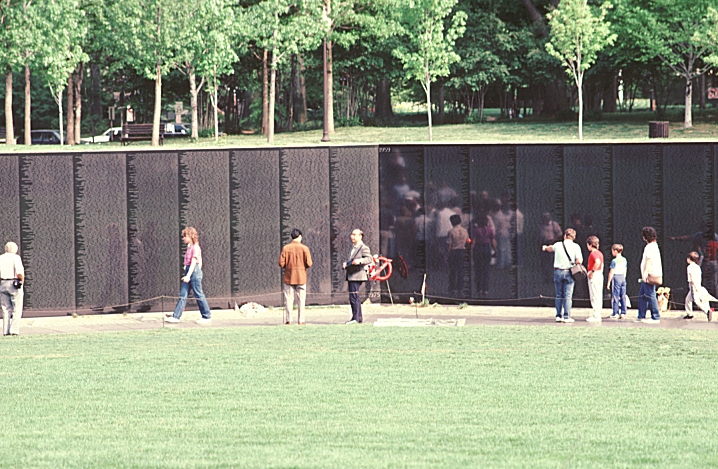
We no longer know who built those fabled monuments to the grandiosity of kings, pharaohs, and gods; nowadays, at least, it's easier to identify the various wonders of our world with their architects. Maya Lin, for instance, spun the moving black marble Vietnam Memorial from her remarkable brain for the veterans of that war; Frank Gehry dreamt up his visionary titanium-covered museum in Bilbao, Spain, for the Guggenheim; and the architectural firm of BDY (Berger Devine Yaeger), previously responsible for the Sprint Corporation's world headquarters in Overland Park, Kansas; the Visitation Church in Kansas City, Missouri; and Harrah's Hotel and Casino in North Kansas City, Missouri, turns out to have designed the biggest wonder of all -- an embassy large enough to embody the Bush administration's vision of an American-reordered Middle East. We're talking, of course, about the still-uncompleted American embassy, the largest on the planet, being constructed on a 104-acre stretch of land in the heart of Baghdad's embattled Green Zone, now regularly under mortar fire. As Patrick Lenahan, Senior Architect and Project Manager at BDY, has put it (according to the firm's website): "We understand how to involve the client most effectively as we direct our resources to make our client's vision a reality."

And what a vision it was! What a reality it's turned out to be!

The Legal Alien wanted to know for himself, and went to the BDY website. We found a map of the construction area in Baghdad, along the river:

The (walled) area has the size of an urban district. The about a 1.000 strong staff (not counting family members to be housed in villas and apartment blocks on the site) and several 1.000s of other personnel (local staff, guards, maintenance) and protection (US army, American contractors). The building itself is done by kowaitian firms, employing cheap east-asian workers. It is not difficult to imagine, what the Baghdad man in the street feels about all that. Those feelings are probably stronger even, than they had against Saddam Hussein's frenetic palace-building. I suppose, that the New Orleans Katharina-victims, who are still waiting for reconstruction, will share those feelings.

The following images from the BDY Architects' website, need to be clicked on, to see them in full splendor:

1. An overview of the site.
2. residence of the Deputy Ambassador.
3. A Marine Guards an entrance.
4. Tennis- and Basketball facilities.
5. Apartments Building with palm garden.
6. Swimming Pool.

Accompanying text by BergerDevine+Yaeger Architects, Kansas, USA:
Baghdad US Embassy

Following successful completion of the preliminary concept plans and the full embassy master plan, Berger was commissioned to prepare the design-build “bridging documents” (based on 35% design) for construction of the self-contained embassy compound. Berger Devine Yaeger, Inc. (BDY) was the architect for this work. The construction (currently underway) is being executed in four concurrent packages. This self-contained compound will include the embassy itself, residences for the ambassador and staff, PX, commissary, cinema, retail and shopping, restaurants, schools, fire station and supporting facilities such as power generation, water purification system, telecommunications, and waste water treatment facilities. In total, the 104 acre compound will include over twenty buildings including one classified secure structure and housing for over 380 families.
In short: This construction was designed to symbolise the New American Century, the power of intimidation of the sole "superpower". It goes along with the huge US military command center "Camp Victory" that is housed, somewhat to the Nort-East of Baghdad, in a former Saddam palace, complete with zoo.

Imperial Isolationism?
During my whole life, from when I was a pupil in an Amsterdam high school, until the end of the century, when we criticised US policies, we were told that, perhaps we were right, but that it was dangerous to say it too loudly, for, otherwise, the US could return to "isolationism" - one of the causes of the European crises, leading to the Second World War, in the 20s and 30s.

The new European generation can no more be convinced of that: The US have, since 1990, and à fortiori, since 2001, already returned to an isolationism that is more agressive than 75 years ago. They are not only celebrating it at home. Now, they have also exported it.

A new phenomenon in history: An isolationist imperium!

Like Nietzschean "Übermenschen", unmoved by the feelings of others, even provokingly humiliating them, they offend allies, pretend to rob nations of their wealth in the name of some free-market principle.

No isolationism so dangerous as an exported isolationism...

Originally posted in A Legal Alien in New York

Friday, May 04, 2007

Bush Terminator: How many Friends Eliminated?

This post originally appeared in "Legal Alien in New York". It may be interesting to our European friends, too.


Bush consulting angrily with officials (November 2006), while signing a law that protects his Guantanamo and torture politics. (BagNews)

The extremely good blog by Tony Karon: Rootless Cosmopolitan, publishes on May 2, "The Blind Spot in Israel's War Probe". What is the blind spot? It is the US intervention into Israeli politics and warfare during the Summer War of 2006 against Lebanon. The first part of the official report of an Israeli government-appointed commission about that war was published some days ago. It deals with the first five days of that catastrophic event. Calls for Israeli Prime Minister Olmert to step down are as yet unheeded, but a Tsipi Livni ultimatum (today, May 3) will probably do the job.
Olmert with his Patron...

How many foreign Friends of the Bush administration's casualties will add up, before there will be put an end to it? Olmert will for sure have to step down. He will neither be the first-, nor the last one of the leading politicians of a number of countries who'll have to pay a heavy penalty for their trust in Bush.
Blair with Balkenende, April 2007: Both will have to step down, sooner or later, because of their alliances with Bush.

Tony Blair, the British prime minister, will be the next one after Olmert. He announced that he will fix a date for his abandonment of power in Great-Britain one of the next days.
Former victims of loyalty to Bush were Spanish prime minister Aznar and Italian prime minister Berlusconi.
José Aznar, staunch supporter of Bush. Was ousted as PM in Spain in 2004, after lying about the background of the 11/3 terrorist murders in Madrid. Is now a featured speaker of the Washington Speakers Bureau.
Silvio Berlusconi, Italian Prime Minister. Was outraged as he was NOT invited to the Madeira conference in March 2003. A top secret agent of the Italian SS was killed by American soldiers in 2005. His distancing from the US afterwards did not help him: He lost the 2005 elections to Prodi, who retired all Italian military from Iraq.

A holocaust of falling heads of government accompanies the sunset of the Bush administration. Ironically, while Bush started his tenure with the objective "to take out Saddam", his list of persons taken out is populated mostly by his friends. In the US, we should mention Powell and Rumsfeld, Tenet and Harriet Miers. Although the latter never had a chance. John Bolton had to be added to the list a year later.
Tenet, former CIA director, who took his distance from Bush and Cheney recently, writing a book.
My favored portrait of Miers and Bush, announcing her candidature for the Court. Bush, just after his election for a second term, was confident, that he could do anything he wanted. Poor Miers was his first victim then.
Bolton - another victim of Bush' hubris. We are waiting for HIS version of what happened. His neocon friends at the Weekly Standard already let Bush' handling of Iraq and the Middle East down. What is he going to say for himself?

In Iraq itself, Allawi was abandoned, as well as that great friend of the neocons, who was to be president of the new Iraq, Achmad Chalabi, of whom we did not hear much, these times.
Allawi with friends, 2004, in the provisional authority of Iraq, at the signature of the new Iraqi Constitution ceremony.
Achmad Chalabi, master intriguer, who, as an Iranian agent, bedeviled all NeoCons in Washington. Was to become the first president of American Iraq, but ousted, when the Pentagon, who paid for his non-existent movement, discovered the truth in April 2003. Was offered a prominent seat behind president Bush when he gave his State of the Union in January 2004. His ties to the Mollahs were discovered, and, spring 2004, his offices raided by American troops. At this moment, he is biding his time, somewhere behind the screen of Grand Mollah Sistani.

Who will be the next on the list?
Mr. Balkenende, Dutch prime minister since 2002, is a fair candidate. A parliamentary commission will soon be created to research into his stubborn refusal to reveal the "personal", "for your eyes only" letter that he says, Tony Blair sent him in 2003, to make him join the Iraq coalition.
Balkenende with Dutch military in Afghanistan, 2006.

And what about the Polish twins? Poland set high hopes on its substantial contribution to the Iraq occupation. It was bitterly disappointed to discover, that all interesting contracts went to US firms. The former government was busy to reduce their implication to zero. The new, ultraconservative government resulting from the last elections froze that. Polish public opinion is vehemently opposed to the Iraq adventure. Will they stumble also over their alliance with Bush?

The twin Polish president and PM - next victims?

We may have missed some victims of Bush' mess. But it is an impressing list as it is.
Mr. Caligula will normally stay in power until 2009. We have space to make additions to our list...

Wednesday, April 11, 2007

Algiers Bombings: European Solidarity Now!


Today, it was Algier's 11/4.
Not less important to us, than Madrid's 11/4 or London's 9/7.
I do not want to hear that it were the Algerians' fault, that their Salafists united with Al Qaeda.
It is ours. We left free Algeria alone. We stuck to the illusion, that the North face of Africa has almost nothing to do with us. Of course, of course: I do not agree with the Boumediene dictatorship, I did not agree with islamisation and arabisation, I loathed the methods the Algerian army applied to the countryside during the 90s.
Corruption, economic stagnation, isolation - all wrong policies.
But what did Europe do to help Algeria diversify its economy?
Why did we hesitate to join the transmediterranean accession efforts of the EU, led by France and by Spain? That the North-Africans belong to the same cultural and geographic sphere as we do, it suddenly became evident, today, when suicidal bombs ravaged the Algier government buildings and a popular neighbourhood.
I lived in Algier, in June 1963, and I experienced the joy of freedom, of self-management in the 'biens-vacants', abandoned by the fugitives from the North. I saw, what havock, what wounds the the repression during the fifties had caused. And I came to admire the human resourcefulness of so many people I met in the city and outside of it.
Algeria is no Afghanistan. It should not be left to slide into a new civil war, theatre of atrocities committed by fanatics first, by repressive local and foreign military next.
A generous move imposes itself on Europe. In its own interest. Diversification, development, open frontiers should destroy the basis of unrest and frustration that lies behind the upsurge of Al Qaeda and its methods on our doorstep.

Here is what Reuters reports about today's bombings:

Al Qaeda claims deadly Algiers bombings

By William Maclean and Lamine Chikhi
Reuters - Wednesday, April 11

ALGIERS (Reuters) - Bombs killed 30 people in Algeria's capital on Wednesday, attacks claimed by al Qaeda that raised fears the north African oil exporter was slipping back into the intense political violence of the 1990s.

One of the blasts, believed to be a suicide bombing, ripped part of the facade off the prime minister's headquarters in the centre of Algiers. A second bomb hit Bab Ezzouar on its eastern outskirts, the official APS news agency said.

The Al Qaeda Organisation in the Islamic Maghreb claimed responsibility for the bombings in an Internet statement, which also included a claim of responsibility for attacks in neighbouring Morocco and pictures of three "martyrs".

[...]

One Algerian analyst said the operation appeared to be a reply to stepped-up attacks by the army on Islamist insurgents in the Bejaia region in mountains east of Algiers.

"This is a violent reaction to Bejaia operation where important leaders of al Qaeda in the Maghreb are surrounded," said security expert Anis Rahmani.

"I do believe though, that that group has no capability to topple the government but obviously it has the means to disturb the life of peaceful people in Algiers."

For more comments, take a look at my posts in L'Europe chez Soi and in Toto Le Psycho, both in French. In the latter, I dwell somewhat more than here on my relations to Algeria.

Tuesday, March 20, 2007

The Valerie Plame Affair endangers Europe

Starting with "An 21st Century Caligula..." on November 2, 2005, on the Legal Alien in New York blog, I followed the deployment of the 2003 Valerie Plame affair closely.
In my opinion, the primary target of the White House smearing campaign was not, as commonly thought, Plame's husband Wilson, but the liquidation of the CIA front store in Istanbul, led by Plame.
The CIA-Agency involved, was a branch of a CIA-created American firm. Its Istanbul bureau monitored Middle East nuclear efforts. That includes: Turkey, Israel, Syria and Lebanon, Iraq and Iran. And, maybe, Saudi-Arabia and the Gulf States, as well as Egypt.

It is more than probable, that the Plame-Agency produced embarrassing information about Iraq: No nuclear program there, confirming the El-Baradei assessments. But the main embarrassment came from reports about Turkish-Israeli nuclear collaboration, that Cheney did not want to disturb, while the Iranian efforts to obtain a nuclear capacity should not, at that moment be too much published, for that would undermine the reasoning for an attack on Iraq.

Cheney saw a CIA conspiration against his designs. So, when Plame-spouse Wilson, former US ambassador to Iraq and presented as a hero in 1990, when Saddam Hussein took Western nationals as hostages, went public with a denial of Saddam's supposed deal with the Central African Republic for yellowcake, in June 2003, Cheney reacted as if the CIA were using the same methods as he does: His marginal remarks on the Wilson Op-Ed in the New York Times, revealed at the Libby trial, show a hysteric and revengeful psychopath, cought in his own intrigues.

Meanwhile, the CIA has been more or less dismantled. I have no reason to deplore that. The Agency was during 50 years across my way, in Holland and in Europe. But it's liquidation means also more freedom for the Bush cabal to manipulate information from abroad so as to lure the US into extremely dangerous adventures.

Juan Cole, the indefatigable Middle East Professor from the University of Michigan, daily blogger about Iraq and the Middle East region, produced Saturday an analysis, concise and clear, about the Plame affair. I left out the paragraphs about the details of the US juridical system. The main message is evident: The affair is not about an error of judgment, but it is about high treason. The US have been unnecessarily endangered by the Cheney intrigue. In my view, it is not by chance, that, in June 2003, Cheney obtained the (hitherto) presidential privilege of being allowed to mention undercover US agents.

Juan Cole:

Giving Aid and Comfort to the Enemy: the Plame Affair

Valerie Plame Wilson, whose career Karl Rove and Vice President Dick Cheney wanted destroyed in a fit of pique, was finally allowed to testify before Congress on Friday.
Some in the blogosphere are arguing that the outing of Plame Wilson was an impeachable offense. Defenders of Rove and Cheney say that if they did not know that Valerie Plame Wilson was an undercover operative, then they did not break the law by trying to out her.
[..]
Moreover, they did know that Plame Wilson was involved in counter-proliferation efforts, including against Iran. By leaking her name with the intent that journalists such as Judy Miller publish it, they were conveying information about a CIA operation to Iran. That is high treason, even if they did not know she was covert. All they had to know is that she was trying to impede Iran's nuclear program, and that the Iranians did not know that that was what she was doing. You can't make her public without also letting the Iranians know.
[..]
It aided and comforted Iran to know that Valerie Plame Wilson and her dummy CIA corporation, Brewster Jennings & Associates, had been engaged in counter-proliferation efforts against it. Bush put Iran in the Axis of Evil, thus declaring it an enemy of the US.
Therefore, Rove and Cheney (and maybe Bush himself) gave aid and comfort to an enemy of these United States by a deliberate act of outing a CIA operative who was not known to Iran and whose cover and activities had not been.
That's treason. That warrants impeachment.
With an internally divided and short Democrat majority in Congress, an impeachment of the Vice-President, and the more so of the President, is not soon to be expected.
As a two-thirds majority in the Senate is necessary, this option is still far away.

The European Union, endangered by the liquidation of the CIA anti-proliferation outpost in Istanbul, should act on its own now. The nuclear configuration of the Middle East, with Israel at it's core, should be monitored daily, for it is on Europe's doorstep. US adventurism, launching Israeli (and Turkish?) nuclear strikes against Iran, would provoke a nuclear response against Europe, the South-East (Greece, Bulgaria, Romania, Cyprus, Turkey) in the first place.
Where is our plan?

Friday, March 09, 2007

Afghanistan: Italy and Spain agree to abstain

The US, and the UK via NATO, are urging European countries to join the hopeless anti-guerrilla struggle in (Southern) Afghanistan. Two relatively big European powers, Italy and Spain, decided recently not to join in. Certainly one of the reasons, why the Blair Government, days after their announcement of the Iraq troop reduction, felt obliged to increase their number of military in Afghanistan.

In the European press, remarkably few attention has been paid to the Latin 'defection'. If any, there was some muttering about circumstantial causes:
Such is not our view.
Both governments witness responsibility, diplomatic finesse and realistic assessment.
The Italians, for instance, are not afraid to take the lead in the UN Southern Lebanon dissuasion force. They rightly think, that that investment has a real impact upon a vital interest for Europe and that it has some chances to succeed. Spain, the home country of EU foreign Commissioner Solana, apparently has adopted a more EU-oriented international security policy, which is not made into an issue by its ferociously antisocialist opposition.

In the actual Afghanistan, the conditions are not open to a productive intervention by European states. What started as a popular uprising against a foreign oppressor, is being taken over by Pakistan-based 'Talibans'. That struggle cannot be won, either by terror (the American-British-Australian way), nor by appeasing (the Dutch way in Uruzgan).

The British and Dutch governments should sit down and listen to their European partners. A common European security policy is more needed than ever.

Tuesday, February 27, 2007

And If an Iranian Nuclear Bomb Were Good for Peace?

Unstoppable proliferation
Iran is surrounded by nuclear powers: Russia, Turkey (through NATO warranties and through the special arrangements that were made during the Cuban Missile Crisis in 1961), Israel, Saudi-Arabia (which country is, in all probability, co-proprietor of the Pakistani bomb) and Pakistan. On top of all that, the US fleet in the Gulf is stuffed with nuclear arms.

The USA and its Western allies, having tolerated, if not supported, an
  • Israeli development of a considerable nuclear capacity since the sixties,
  • it's transfer to Apartheid South Africa in the seventies,
  • the Indian bomb,
  • the Pakistani bomb, and
  • just some weeks ago, tacitly accepted the North-Korean capacity of building nuclear weapons, -
why do they make such a fuzz about the coming-out of a new small nuclear power?

Owning the Bomb works two ways: it generates arrogance and stabilisation of rogue regimes AND it learns them, paradoxically, to behave...
As we saw above, Iran is far from being the first country to introduce non-great power owned nuclear arms in the region. And it is not the first one, either, to threaten Israel with a nuclear response, if it uses its nuclear capacity against it or its allies. In 1973, the Soviet Union, when Israel considered nuking Egypt (Cairo), put its nuclear missiles in the Caucasus on alert and let that be known. The appeasing mechanism of mutual destruction risk, main element of the Cold War Years did its work then, too: No nuclear arms were used and a truce, later peace, was concluded between Israel and Egypt.

If it were true, that the disappearance of the Soviet Union and the ending of a bipolar world, would have made any proliferation (further proliferation) of nuclear capacities, suddenly extremely dangerous, why then, have the US and their nuclear armed allies not profited from the window of opportunity that existed during the Nineties, to implement the treaties and arrangements that existed at that time, to impose nuclear disarmament on the world, beginning with the existing nuclear powers? It was not impossible, as has been shown by the successful, UN controlled, nuclear disarmament of post-apartheid South Africa, the Ukraine and possibly other post-Soviet countries. (Libya is another case: it is essentially a security deal between the existing regime and the Americans, piloted by the UK, bypassing French, Italian and Russian ambitions in that region.)

The only answer to that, I am able to imagine, is, that nuclear armament has become, under certain conditions, a vector of stability and security, and, even, a condition for peace.

A Chirac "lapse" (?)
Some weeks ago, I found a confirmation of that, at first view, paradoxical proposition. It was here, in At Home In Europe (Week 5: Chirac on Iran, etc.), that I mentioned the "gaffe" of French president Chirac. The old fox, talking with American and British press, said that a limited number of Iranian nuclear arms, would do not much harm, but that it would, on the contrary force Iran into a more responsible policy. The day after, he made 'amende honorable' and slipped hastily back into the ranks of the Western diplomatic orchestra that puts (with some dissonances) maximum pressure on Iran to abandon its nuclear program. But it had been said. It is an expression of European uneasiness with the US brinkmanship in the Near East. Maybe, it was not a "gaffe" at all, but a voluntary statement of difference, intended to stay alive during one day only, for a small nuclear power like France cannot allow itself to appear dissociated from mainstream "international community" diplomatic opinion.

Which, if I am right, would draw attention another confirmation of the chiraquian proposition, i.e.: that even an established nuclear power like France, can only tell the naked truth about nuclear policy in a way, that the Germans would call "klammheimlich".

Before and after the collapse of the Soviet Union: the same rules apply?
And, considering the question from the experiences out of the Cold War era: Why should not a more complex and layered system of guaranteed mutual destruction, as it has come up after the Cold War, work out in the same way as the bipolar one has done from 1945 to 1990?

Apparently, it does!
- We mentioned the Israeli-Egyptian peace of 1979.
- We could also mention the consequences of the nearly contemporaneous accession of India and Pakistan to nuclear armament: Both countries are working out serious deals now on their eternal differences (Kashmir), have already a series of smaller détente measures in place for traffic and commerce, and are working out a major strategic deal about a gas and oil pipeline from Iran to India, running through Pakistan. Some years ago, this was unthinkable.
- Between Turkey and Israel, two potential foes, it is about a certainty, that (secret) nuclear deals grease the harmonious military and economic (and strategic: water!) relations that exist between them.
- We could continue: Nixon's travel to China (1972), Russian-Chinese peace after having warred over the Amour region, etc.

It is absolutely not my personal preference for the world, this nuclear mutual deterrent system, but it works. Undeniably. I am even nearly convinced, that, if Saddam Hussein really had possessed the nuclear capacities that the US and the UK ascribed to him, the actual invasion of that country would not have taken place. But about Iraq, later.

Mr. Chirac, probably, spoke out of his own experience as leader of a minor nuclear power, when he mentioned the appeasing effects the possession of this kind of armament by a given country, has on its behaviour in international policy.

Daring to think the logics of multi-layered proliferation
Anyhow, having missed the opportunity in the beginning of the nineties, I see no way to halt a further proliferation of nuclear armament to a number of countries. We have to live with that, and dare to think of how it works and how to deal with that.

That is how we arrive at North Korea. Part of the famous "axis of evil" (Bush, State of the Union, 2002). Like Libya, the North-Korean regime intends to make a deal with the US, in order to guarantee its security and the continuation of its despicable system. Nuclear armament is the only asset it sees, to force the US into such a deal. That worked more or less fine during the Clinton era. A deal, acceptable to South Korea, Japan and China, was in the works. With the coming of George W. Bush, all that changed radically. Why?

I see two reasons for that.

1. The Star Wars Illusion in 2001
The first has to do with star wars, the idea (illusion?) that the US could escape the constraints put upon a 'normal' nuclear power, protecting themselves against nuclear attack with an interception shield (missiles that kill incoming warheads at sufficient distance from the US (mainland). In a deal with the former Soviet Union, the development of this kind of systems had been forbidden at the end of the Reagan era. But Bush revived this effort, and could do so, as the Soviet Union did no more exist, and Russia was not interested at that time, to keep up the deal (got probably something in return for abandoning its opposition). Installation of that "shield", would (will?) indeed allow the president of the US to use nuclear arms, without the possibility of retaliation.
  • (At least, not on the US mainland - The risk for allies located elsewhere, would substantially grow: A nuked Iran, not being able to reach the US, could, for instance, retaliate in stead in Israel, like Saddam Hussein symbolically did in 1991 with his Scuds. The adventurous British, Dutch, Polish, Danish, etc. policies like we have seen them in Iraq, could even endanger the whole European Union, in such a case, the American shield being unable to protect them, even if they have missiles in Lithuania and Poland. In the last case, a retaliation on Europe becomes even more likely!)
The existence of the "shield" would have allowed the US to forbid whomever they wanted to have nuclear arms, and thus policing the world without fear for retaliation: The illusion of the 'American Century' manifesto of the neoconservatives (1997). The first months of the Bush presidency (2001) were nearly exclusively dedicated to the development of this main geopolitical revolution in the making. Many witnesses confirm this, in relation to the lax treatment of the Al Qaeda warnings. Terrorism was not an issue. The Shield would change everything.

In retrospective, Bush acted in January 2002, as if he had already such a shield ready for use. This was to become one of his major errors: He did not intimidate Iran and North Korea. On the contrary: North Korea broke the Clinton-deal and rushed to make its own weapons. It was only in 2002, that Iran seriously started to create the conditions for producing nuclear armament of his own. Other countries may also have accelerated their efforts to become nuclear powers because of this new US policy.

CONCLUSION: The first reason for the US abandoning the use of balancing the nuclear terror of mutual destruction between regional nuclear powers, was, if I am right, the illusion of being (soon) protected against (nuclear) retaliation, abandoning at the same time its allies to greater risks of becoming victims of that. The US would go it alone. What they did. Ask the NATO allies who offered a broad coalition after 9/11, and were harshly rebutted.

2. Underestimating China and other not-so-second-rate nuclear powers
The second reason is to be found in China. A first warning came even before 9/11. An American spy plane was forced to land on Chinese soil (the island of Hainan, facing the Vietnamese coast). All its installations were practically intact. First efforts to intimidate the Chinese at returning plane and crew, proved useless. Bush had to accept the Chinese conditions and to acknowledge, that Chinese technological progress, backed by a nuclear capacity, was something to reckon with. But not all consequences of that were thought out in Washington. Especially concerning North Korea. Apparently nobody in Washington got the idea, that North Korean nuclear armament possibly was not as much directed against the USA as against their big Chinese neighbour. So, during six years, the US continued to do the 'dirty work' of protecting China against an independence-loving neighbour and helping its ambitions for regional domination, menacing North Korea, isolating and starving it.
Very recently, the State Department announced a sudden turnabout in the relations with an -in the mean time nuclearily armed- North Korea. Everything is going to be smooth. (If Mr. Cheney will not ultimately have his way.) A possible reason for this may be the successful interception operation China executed recently of an intercontinental ballistic missile. Shit! The US, if they will ever have their shield, they will not be the only ones to have it. The Chinese too... Which means, that it is of still more importance to the US than before, to dispose of a - be it a small one - nuclear power on China's doorstep! (North-) Korean warheads will be able to reach Beijing (at some hundreds of kilometers from the Jalu River), where American intercontinental missiles will fail.

CONCLUSION: The second explanation for the unreasonable Bush politics on local nuclear balances might be their underestimation of the capacities of other nuclear powers. This seems to have been repaired in the North-Korean case.

IRAN
Will such a turnabout also occur in the Iranian question? Difficult to say.
There are reasons enough for it. A nuclear Iran would help to reign in exaggerated Russian ambitions in the Caucasus and in Central Asia. It would feel free of the risk of Israeli operations like the 1981 one on the nuclear reactor in Baghdad, and thus become more open to the necessary Middle East overall peace deal as proposed by the Arab countries. To the east of Iran, in Afghanistan, hidden (or uncontrolled) Pakistani help to Sunni extremists suppressing the large Shiite minority in that country, would be discouraged, and, more in general, one of the main aims of NATO intervention in that country (curbing Pakistan-supported talibanwise tribal criminality) would come nearer, without having to loose another war against local insurgents.

Against
it? Yes: Iran would control the Straits of Hormuz completely. A danger to oil supply? I think that this capacity does not alter much to the existing situation. The interest of Iran with ongoing oil export is much bigger than it could gain by blocking half of Saudi-, all of Kuwaiti-, 60% of its own- and 70% of Iraqi oil exports. And, yes, the execrable Mullahs' regime would stabilise itself somewhat more. In the beginning. But as much as the external enemies will decline in number and in risk, the strong democratic and liberal tendency among the Iranian people will have more chances to gain the upper hand against the theocracy.

Finally: IRAQ
The only real victim of an Iranian accession to nuclear armament, would be: IRAQ.
The centuries-old rivalry between Arabs, Kurds and Persians would get unbalanced in favour of the last ones. Only twenty years ago, Iraq, under Saddam Hussein (with American help, it is true), was a virtual victor over Iran in the horrible war both countries fought then against each other. The balance of power between the two countries would become nonexistent. That balance is one of the pivotal givens of regional stability. Bush' father still understood that well, when he decided in 1991, to keep Iraq alive, within its historical borders, taking advice from the Saudis. Son has tried to do it his way, with the consequences we see at this moment. Even without nuclear arms, Iran is more and more setting its law in Baghdad. With nuclear arms, this tendency will only be stronger.

The only solution to this, is a very ironical one: Let the Americans help the Iraqis to build a limited nuclear capacity of their own, thus doing the work, Saddam Hussein was prevented to do, and what, not having succeeded, but nevertheless accused of, was reason for murdering him.
It would be a monumental good-bye present by the US to suffering Iraq! (And it would not cost any more American life there...)

But, theoretical as my reasoning may be, and, however much I wish all nuclear armament to disappear from the earth, I believe that, geopolitically, given the unstoppable proliferation, my idea is sound. History goes from one unimaginable irony to another. It is unpredictable.

Which should not stop us thinking.

(This text is the third version of a commentary I published in German to a blogpost by BigBerta on Iran and the war that prepares itself against it [in DE] on February 25, 2007. In spite of what commonly happens, the text was not lost in the subsequent translations and rearrangements: The second German version in In Europa Zu Hause (2.25.07) is more balanced than the first, while the French version in L'Europe Chez Soi and in Toto Le Psycho (cross posted) of the same date, is better still. This English version here, of February 27 (also to be published in Legal Alien in New York), pleases me most. A Dutch version (upcoming), in In Europa Thuis) will, hopefully, crown this unusual excursion of mine into nuclear geopolitics.)
Related Posts with Thumbnails