Since February 2009 , this blog and Huib's 3 other Euroblogs are together at:

AT HOME IN EUROPE [EU] (at EURACTIV)
- In Europa Zu Hause [DE]
- L'Europe Chez Soi [FR]
- At Home in Europe [EN]
- In Europa Thuis [NL]

Showing posts with label EU Treaty. Show all posts

Tuesday, February 09, 2010

Wilders' Money to remain hidden to you and me, but open to CIA?

The European Parliament will have to decide, this week, if it allows American authorities to data-mine your and mine international euro-transfers by way of copying the SWIFT data.
Swift services banks in Europe and elsewhere. For instance, when I send some of my Dutch retirement money to my Belgian account, the ING bank warns me, that this may be monitored by American authorities.
I have no problem with that. If the CIA wants to know, that I live in Brussels and that I buy my shrimps there at Delhaize, good riddance, OK with me.
But the EP has a point, when it says, that American authorities have to have a reason, when they ask for Swift data. Any European nation allows prosecution to scrutinize my financial data, or listen to my private communications, only, when there is a probable link to crime or terrorism. If there is no one, I can trust my bank, that it protects my privacy.
So, why does the CIA not trust my national European secret services?
That is a long, difficult and complicated story.
I will tell you another time. For a considerable part, they may be right. For who believes, for instance, our Italian secret service Mafiosos?
So, please, CIA, NSA, search for bank transfers linked to Al-Qaeda! I couldn't agree more.
And, do not forget to tell us about Mr. Wilders, from Holland, who gets millions of dollars from US accounts for destabilization of European nations.
Pardon me, if I watch the Dutch representatives from he PVV "party" in the EP.
What are they up to?
Will they vote for a going Dutch alone, as their program states? Or will they vote for transparency to the CIA, while Dutch public opinion remains left in the dark?
Hey, Mr. Wilders, your credibility is at stake!

Friday, January 22, 2010

How the Wilders Hysteria is Linked to Holland. Who exploits it. And how it can be ended. (2, Dutch society)

Wilders is NOT about Islam. Any foreign intrusion would have done. He is about xenophobia and hate-mongering.
In the first part of this series, we talked about the transnational effects of the Dutch Wilders hysteria against Muslims. And how it is exploited and financed by foreign sources like the Advocacy Project of Daniel Pipes in the U.S.A. and Israel. We will have to return to the international financing problem as well as to the ongoing European contamination, in one of the next instances.
"Geert Akbar": The some 200 activists who supported Wilders on January 20 at his Amsterdam court appearance, were not without some humour... 

Our subject here, in the second part, is the typical Dutch background of the hysterical Wilders upsurge. The Wilders phenomenon has nothing to do, in our opinion, with the Islam. Any religious, ethnic or cultural intrusion into the dream of a peaceful and quiet Dutch society, could have done the job. Wilders is not about Islam. It is about xenophobia. And hate-mongering.
Redundant workers are left alone
As many researchers and thinkers nowadays understand, the globalization of economy, trade and culture are felt as an intrusion into their daily life, by the men and women who live in marginalized parts of Western cities. Structurally, they are no more needed for production of goods. (See my articles about the rise and downfall of the need for urban workers at the e-urban site: Les quartiers relégués... (FR)Missbrauch der Geographie des Armuts.. (DE).
Foreign, mostly Muslim, immigrants take the jobs of the former local (former generation) immigrant workers. And the new immigrants are in their turn put aside, as their wages get too high, compared to those in, for instance, China. But China is over their horizon. The local inhabitants only see their immigrant neighbours.
And that is hard. Welfare State has, since a century, taken responsibility for the citizens' well-being, their security and their peaceful life, taking the place of the Church and the heads of the village communities. And it is felt, that the State fails. Nobody is really left alone. But life has become pointless. Strangers are coming in. They take our houses, our schools, our local shops. The State does nothing against it. Frustration becomes aggression against the newcomers and their children: headscarves, minarets, halal slaughtering are symbolical targets.
How is it possible, that an open, tolerant, society like the Dutch, reacts so strongly against the newcomers?
The Dutch tolerance is an "empty tolerance" as in: "De Lege Tolerantie", a book, published in 2007 by a number of Dutch thinkers and writers. It is empty, for it is in fact a way of hiding within one's own community.

It was developed during Middle Age and the early Modern Times. As a small country, the Dutch republic, in its summit of power, received the Flemish refugees from Antwerp and made them the top of Lowlands' culture (notably Joost van den Vondel, poet). Sepharade refugees from the Iberic countries were welcomed, as new traders on the world markets. Baruch d'Espinoza, one of them, was condemned to isolation, by the Sepharade court, confirmed by Dutch justice. The Jews had to manage their own problems.

As long as immigrants did not endanger Dutch elites' relations to England or to France, they were welcome. Not in the countryside, but in the cities. When the 18th century was nearing its end, Dutch "Patriots" demanded a Democracy in Holland. Second-class citizenship rules for Jews were to be abolished. But, finally, full-fledged discrimination was reestablished under the "Restoration" regime, which lasted from 1814 to 1830.
In the second half of the 19th century, the country accumulated its riches from its colonial possessions, the Netherlands Indies, i.e: Indonesia. Typical Dutch "tolerance" was developed into an ideology of "inspraak", "giving your opinion", imposed upon Indonesian leaders. "Inspraak" is not about real policies. It deals exclusively with social issues. It was a check on how far Dutch authorities could go in their exploitation of Indonesia.
The imperial illusion
While the British left the Indonesian wealth to their Dutch clients, those last ones lived with the illusion of an imperium. Holland considered itself both as a world player and as a small reserve of peace and civilization. It did not take part in the First World war, it only profited largely from trade with both sides. The German Nazi occupation in 1940 was a shock, but was relegated into shameful oblivion afterwards.
Dutch society reacts to foreign arrivals with tolerance. But what does Dutch tolerance mean? It is not about accepting, but about leaving alone. Leave us alone. Manage yourselves. The well-known "pillar" structure of the Dutch nation is its outcome: catholics, protestants, conservatives and social-democrats have each their own "pillar" under the state. It consists of social, educational, cultural and political organizations, whose tops negotiate all the time compromises with the other pillars, in order to keep the state going.
The emptiness of Dutch tolerance
Secularization, death of ideologies, dealt a mortal blow to that system from the sixties on. So mortal, that there can be no question of a new Dutch "islamic" pillar now, at the start of the 21st century. Which leaves Dutch society with a fundamental destabilization. The "inspraak"-strategy, so successful with the Indonesian elites, doesn't work with the new immigrants. Denial, until the middle of the nineties a favored attitude among the political elite of the country, became impossible after the tumultuous passage of Pim Fortuyn, murdered in May 2002.
In short: Dutch society is without a clue. Traditional elites are either hiding behind their pillar walls, or expecting the fall-out of Fortuyn- and Wilders-like racist movements to fall into their laps. That is why Parliament and traditional parties (for the most part) let Wilders do his thing. Hoping, that somebody would dare to come forward and put him in the right place. At this moment, it is a part of the Dutch judiciary system, who are coming forward against Wilders' hate-mongering. There is little or no support from the political side. Everybody is commenting as if it were a match between two foreign soccer teams.
Strangers to the new European community
The structure of the European Union, a hybrid hesitating between a common civilization and a loose union of independent nations, does not help. Dutch citizens, in their majority, do not feel responsible for the European common good. As the traditional parties do not work to engage citizens with an European project in the world, demagogues like Wilders, find an ample room to play with the illusion of a Dutch "Alleingang", as if the country were still an imperial power. Wilders copies the model of the ex-maoist populist Dutch "Socialist Party" in the European Parliament, who sabotaged during many years all European construction.
A commenter on this blog, rightly said, that a Wilders movement would not be possible in the bigger European countries like Britain, France, or Germany. But, as the EU is composed, now, of 27 countries, a destabilization of one or more of the smaller ones, like Poland, Denmark, Ireland, Italy, Greece or Holland, could contaminate the whole process of European unification.
2007, a financial support for the Irish movement against the Lisbon Treaty, channeled through a military contract with the US State of Georgia, and managed by the American Heritage Foundation, succeeded in endangering the whole project. The US funders behind Wilders may have the same intention.
That is why not only the Dutch, but all people of the EU should be worried about the fragility of democracy, as illustrated by the destructive Wilders phenomenon in Holland, and its hidden sponsors from abroad.

(From At Home in Europe (EN) and Huibslog)

Please; comment at: At Home in Europe - Euractiv, where this post is republished!

Thursday, June 28, 2007

'Square Root or Death': Kaczinsky-Poland keeps course


Sad. Who could have believed, only two or three years ago, that we should be counting the sequels of intra-European wars of the twentieth century in regard to demography, in order to get the right number of votes for every country in the European council?
Well, nothing more realistic than surrealism.

France and the UK lost about 20 million young men in the First World War (1914-1918). The ensuing demographic effect is stunning. Until 1940, those countries lost tens of millions of potential babies. The consequences are felt even now. Are France of the UK asking for compensation in vote-power within the European Union?

Poland, a historical victim of three partitions between Russia, Prussia and the Austrian Empire, and, as it says, bereft of 28 millions of its 66 million potential, by Germany during the Second World War, is certainly one of the European countries who may feel themselves a victim of history. Of history. Not (exclusively) of Germany.

Today's Germany is inhabited by 90% of people who were not yet born, or were small children in 1945. Generations grew up in a democratic society, living with the loss of parents, wealth, happiness, caused to the people as a whole, by carpet-bombings, forced military service, hunger and distress. Should Poland get favours at their cost? And, at the cost of 25 other European countries, who had nothing to do with Nazism or are victims themselves?

In "L'Europe Chez Soi" and "TotoLePsycho" (French) [Arithmétique polonaise (et néerlandaise)], two days ago, I dissected the outrageous Kaczinsky position. Culminating point: The three million Polish Jews who died prematurely during the World War, not only at the hands of Nazis, but with the willing and sometimes very enthusiastic collaboration of... Poles. An antisemitic tradition that was continued in the 1945/46 Polish pogroms against returning Jews and the 1956 antisemitic turn in the regime, that caused a further emigration of many of the remaining Polish Jews. Are they counted, too, within the 28 million extrapolation?

The Kaczinsky twins régime continues its outrageous claiming (EU-Observer 27.6.07):

Polish PM ups ante in Germany war talk

27.06.2007 - 11:02 CET | By Andrew Rettman
EUOBSERVER / BRUSSELS - The Polish government has compared modern Germany to the pre-WWII Weimar Republic, continuing the hostile rhetoric which erupted in the run-up to last week's EU summit and which shows no sign of abating ahead of next month's formal negotiations on a new treaty.

Reacting to a German newspaper remark about "the square root of the dead" - a reference to Polish claims that EU votes should take count of war losses - prime minister Jaroslaw Kaczynski issued a warning to Europe.
"Something bad is happening in Germany. As in historic days gone by when most Europeans were too afraid to talk, so it is today," he said on Tuesday's (26 June) "Sygnaly Dnia" national radio show.
As a Dutch national, and having lived under German occupation, I feel, I am rather sensible to German pretensions. I cannot stand them. But what I am seeing here, is not a complaint of hurt cultural and national feelings, but pure and naked revanchism.

I understand Polish fears. The modern (XVI-XX) history of the Netherlands is one of subtle balancing between the three European "big" powers, ending, after 1945, into an absolute reddition to the new dominating power in (Western) Europe: the US. Poland is trying to do the same. In spite of its deceptions in Iraq and with the hosting of CIA torture centers, it counts on the US, only the US, for safety.

In my view, it should understand, that there will be no safety for Poland, without a strong Europe, that has its own defense and energy policy. But, in stead of furthering such a policy (against the classic powers) together with the smaller European countries, Poland is blocking or trying to block, any possible progress in those domains. Look at what they are after: a blocking-, a debilitating-, power (EUObs.):
"The dispute is whether this [the reasonable delay when a national Parliament opposes a common European decision] is after three months or two years. We agreed two years," he [Jaroslav Kaczinsky] said. "Two years is a long time. Any body who has this possibility [to delay EU moves] will be treated seriously."
The English (regrettably) simply opted out, leaving it to the other 26 to squabble or to go forward. The Polish stand is: sabotage.

Is it a mere coincidence, that this is exactly what the US (neoconservative) right is hoping for?

Tuesday, April 03, 2007

EU Treaty Renewal: What will the UK do?

The British CER (Centre for European Reform) is a London Think Tank. It favours an open British attitude to Europe and produces intelligent analyses of vital European subjects like enlargement, free market regulation, European security &c. All seen, of course from an UK-centered point of view. They publish a blog that is very much worth consulting.
Below are some parts of an article by CER Director Charles Grant. He assesses the conditions under which the UK will have to react next June, 2007, to the German proposals to break the deadlock on the necessary EU reform.

  • I share his assessment on the German, French and other continental positions to be expected. I will add some of mine in the upcoming Dutch, French and German versions of this article in the other Huib's EuroBlogs.
New to me, are his elaborations on the particular situation of power-transfer between Blair and Brown that may be expected in June, 2007, and its possible consequences for the UK and for Europe as a whole.

It is a must-read!

Britain would be unwise to thwart Merkel’s treaty plan

By Charles Grant (Director of the Centre for European Reform)

Published in the Financial Times: April 2 2007 (Copyright The Financial Times Limited 2007), and, April 3, on the CER Website (easier accessible, copyright CER)

Summary:
G
ermany’s ambition to salvage large parts of the European Union constitutional treaty may provoke a serious rift between Britain and its partners.
Tony Blair and Gordon Brown may be heading for a collision over what to do about the German plan. But the general view in Britain seems to be that EU treaty change is irrelevant. Indeed, something of a consensus stretches from Treasury officials to Conservative leaders to The Economist: they say the EU should forget about treaty change and focus on crucial challenges such as completing the Doha trade round, revising the EU budget, reducing carbon emissions and economic reform.
However, the EU will be incapable of tackling these important issues unless it first clinches a deal on treaty change.

But, is a 'constitutionally'-, administratively- and governmentally deadlocked EU such a big disadvantage to UK business, compared to the present situation? I doubt it. Grant puts forward three probable casualties that will occur at an isolated British "no" to the Merkel proposals:

  1. Further EU-enlargement will be stopped,
  2. Climate Change policies thwarted,
  3. Necessary budget reforms, notably on agricultural subsidies, down the drain.
Business interests in further enlargements are not impressive: Serbia? Bosnia? Kosovo? And Ukrainian and Turkish accessions are anyway not for tomorrow.
Climate change policies, as imposed by the EU, are not the kind of reinforcements of the EU, business is usually longing for.
The farm policies will be changed, with or without the UK, who are anyway dissociated from that financial burden by way of the exception that has been negotiated for Britain during the Eighties.
What remains, is a further loss of British influence and weight in Brussels.
Up to now, the UK has very intelligently compensated in Brussels for its self-marginalised position. In part because of its size (economically, financially and militarily), but also because of the competency of its representatives and civil servants who work in Brussels. That might change dramatically, if the UK sours the Merkel reform by a virtual veto. But those consequences would be felt only in the longer run.

A preview of the outlines of the Merkel Compromise
Grant assesses the German chances in June as follows:

The Germans want the EU summit in June to approve both a timetable for a conference to amend the existing treaties, and the outline of an agreement on proposed changes. The new treaty would not be “constitutional” and would lose references to an anthem and a flag, but would include the main institutional provisions of the constitutional treaty (such as the full-time president, the foreign minister and new rules on voting).
The charter of fundamental rights, which worries many business leaders, would be axed.
The Germans claim the institutional package is not negotiable, since it was a delicately crafted compromise; if one government tried to amend one bit, others would demand the same right.

With regrets about the Charter of Fundamental Citizen Rights, your blogger thinks, he may be able to live with that compromise. He expects, that continuing negotiations with countries like Turkey will force the EU to reconsider that fundamental omission. - How could you expect the Ukraine, Morocco or Tunisia or Byelorussia to reform their civil rights, if there would not be an European matrix to abide to?

But OK: It is a compromise. A skilled one.

23 out of 27 member states are expected to agree
As Grant points out, it will probably get the adhesion of virtually all continental countries (plus Ireland):
It is becoming clear that most of the 27 member states, and not only the 18 that have ratified the constitutional treaty, will back the German plan. Nicolas Sarkozy has indicated that if he wins the French presidency he will support the Germans and ratify the new treaty in parliament (of his rivals, François Bayrou would back the Germans, while Ségolène Royal’s views are unclear, but both promise referendums on any new text).
The Dutch, Czech and Polish governments have doubts about the German scheme.

The French, in spite of their negative referendum, have worked hard, to find a way out of the deadlock. I agree with Grant, that they most probably will succeed. The present Polish Government will indeed be inclined to follow a kamikaze line, but next ones will be much more flexible. I do not expect that the Czechs would risk to become isolated, even in the company of Poland and the UK.

? ? ? ?

Will the Dutch side with a British veto?
But what about the DUTCH? - The The Hague Government, unlike the French, has avoided any engagement with whatever deadlock-breaking programme, on the European level as well as on the internal level, since its June 1, 2005 referendum disaster. I wrote about that very particular situation in Dutch and in French (L'Europe Chez Soi Blog: "Les 50 Ans de l'EU: L'Autruche hollandaise s'enterre davantage" (27 March 2007). Chancellor Merkel has worked hard on her co-Christian Democrat Dutch Prime Minister Balkenende, starting early last year. The official Dutch policy, as stated by the new Balkenende Government (with Dutch Labour replacing his former liberal-conservative partner) last February, is still resumed as: "Nothing even a little bit similar to the rejected constitutional treaty." That position is remarkably similar to the view of most leading British circles. However, as far as I know, no bilateral tuning between Holland and the UK has occurred up to now. However, the Dutch, considering their relative economic weight, their geographical position and their (lack of) military power, cannot imagine to go it virtually alone, without, at least, British support.

No point of view, only paralysis
This paralytic position can only be explained when we take into account, that the leading Dutch politicians and businessmen (and, indeed the majority of the citizens) are not against the EU and its development into an economic space, a guardian for security, a comfortable scapegoat for impopular measures like the ones in climate protection, nor are they unhappy with a military shield as it used to be provided by NATO. Only, they do not dare to say so. They act as if NATO still exists and did not learn much from "go-it-alone"-disasters like Srebrenica (1995). The real Dutch position is, consequently, very different from the British one, as well as from the Czech- and Polish oppositions. The British are well-advised, if they do not count on the Dutch to keep them company in an eventual isolated position within the EU.

It is my feeling, that my Dutch are simply hoping for further delay of the fatal moment they will be obliged to make a choice. They count on the British, the Poles or whomever, to cause that delay, remaining in the shadows themselves, so as not to have to deal with problems from the German (most important trade partner) side.

Risks of British isolation
Grant does not deal explicitly with this potentially important Dutch part of the problem, but he is right when he states:

However, the British would be unwise to count on others joining them to thwart the plans of the German chancellor Angela Merkel. She is emerging as a powerful and effective leader and has dominated recent EU summits. Other leaders will think twice before vetoing the deal with which she wants to crown the German presidency.

And now the UK side of the problem:

Britain lacks a clear policy on treaty change. Mr Blair will probably represent Britain at the June summit, but Mr Brown will almost certainly become prime minister only days later. [Follow some interesting conjectures on Blairite "kill Brown" tactics, HR] They [the Brownites, HR] worry that Mr Blair may sign up to the plan and then try to bounce Mr Brown into swallowing it. Mr Brown’s allies say he would not do so.

Suppose that Britain alone, or with one or two allies, vetoed the deal that most others want. Being blamed for the ensuing rancour, Britain would lose influence across a swath of policy areas. [Follow the enlargement issue, and the farm and climate change points, HR]

In an EU stricken by institutional paralysis, with Britain marginalised, many member states would expect France and Germany to provide leadership. Ms Merkel and the new French president would dominate the EU’s agenda. They and others would probably create new groupings that excluded awkward members such as Britain. [The Nice Treaty, which would continue to govern EU relations, permits the creation of "vanguard groups" within the EU, HR].

None of this would be good for Britain. It should therefore strive to find a compromise with its partners, and be willing to accept much of Merkel’s package


Compromise-within-a-compromise?
And here comes the compromise-within-the-compromise that Grant proposes for the UK:

But she should remove the provisions that transfer new powers to the EU, since they would oblige Britain to hold a referendum. Thus the more sensitive extensions of majority voting should be dropped, except where it is practicable to give Britain an “opt out” from the area concerned.

Is this viable? I doubt it. Like Grant says it himself: If Germany and the other countries accept that kind of exceptions for the UK, a whole series of countries will start to put forward a conflicting mass of amendments.

My view: Between national governments, neither majority-, nor consensus-voting is ever going to work
In my view, majority- (or conditional majority-voting) among governments of member-states is indeed risky and may lead to unacceptable outcomes.
It should be abandoned in favour of

  • majority voting in the European Parliament (with its population-size related composition), and,
  • as soon as possible, in an European Senate, where national representatives who are uncommitted to narrow member-state interests, will be guardians for their territorial voters within an all-EU framework.
I am very well aware, that this kind of great structural reforms cannot be included into the present compromise. It will be, inevitably, I think, for some later occasion.
But thinking of it, may help, to be less insistent about majority voting issues between governments in the EU at this moment: Maintaining veto-rights and opt-out-rights will become its own foe. Besides: A small bit of extra majority voting will not help the EU much forward.
The other institutional issues, however, if adopted in Berlin, will.

Grant concludes:

"Germany and many others will be reluctant to make such concessions, given that Britain has already signed the constitutional treaty and declared its negotiation a triumph. But unless Britain and its partners can find a way of meeting in the middle, bitter institutional arguments will dominate the EU and prevent it from tackling the issues that matter."

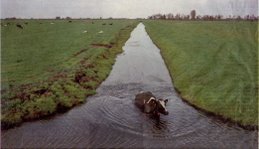
Indeed. A disaster is looming. An ostrich's behaviour is probably the worst possible approach.

Powered by ScribeFire.
Related Posts with Thumbnails